
1. Your Vascular Lifeline: What is an AV Fistula?
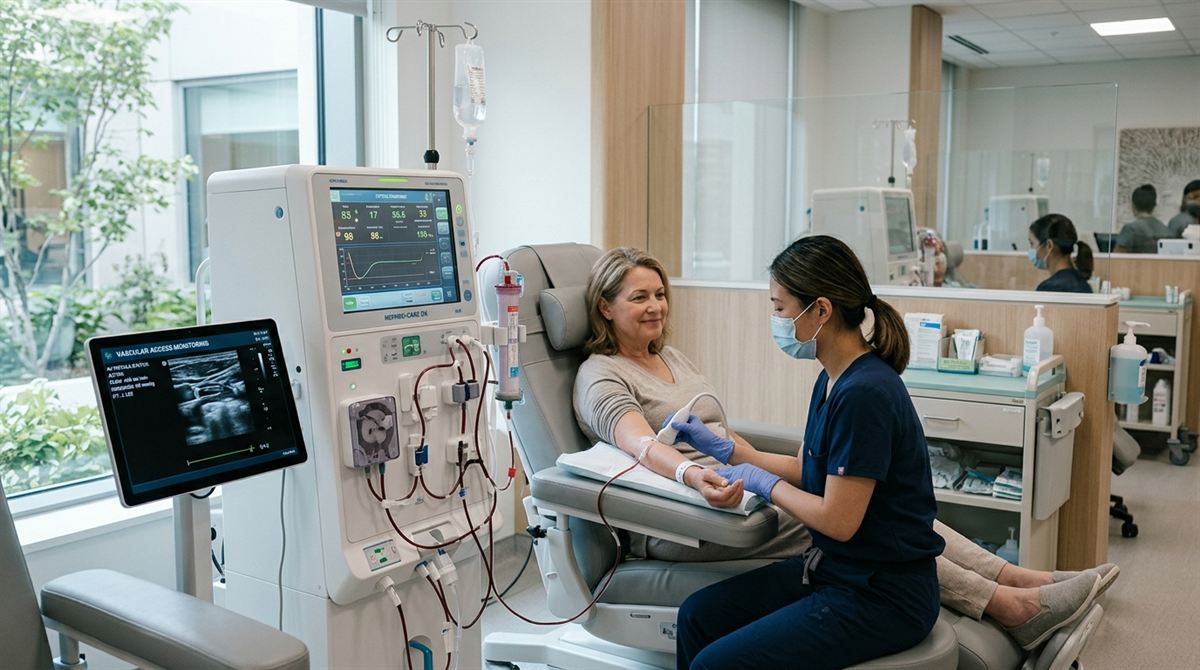
For any patient undergoing maintenance hemodialysis, the vascular access is literally their lifeline. To perform hemodialysis, an artificial kidney machine must pump blood at high speeds (300 to 450 mL per minute) to achieve adequate clearance of uremic toxins. Normal forearm veins are far too small and fragile to handle such rapid blood flow or repeated needle cannulations.
An Arteriovenous (AV) Fistula is a permanent vascular connection created by a vascular surgeon, joining a high-pressure artery directly to a native superficial vein (most commonly a Radiocephalic fistula at the wrist, or a Brachiocephalic fistula at the elbow). High-velocity arterial blood surges into the vein, transforming it over several months into a thick, muscular, high-flow vessel capable of accommodating dialysis needles three times a week.
2. Why Fistulas are Far Superior to Neck Catheters
Nephrology guidelines worldwide unanimously recommend the 'Fistula First' principle over temporary or tunneled central venous catheters (Permcaths):
- Vastly Lower Infection Risk: Central venous catheters penetrate directly into the superior vena cava, carrying high risks of systemic bacteremia, endocarditis, and septic shock. Fistulas reside entirely under the skin with minimal infection risk.
- Superior Blood Flow & Dialysis Clearance: Fistulas deliver robust, continuous flow rates exceeding 600–1,000 mL/min, ensuring optimal Kt/V toxin clearance.
- Unmatched Longevity: While catheters frequently clot within 6–12 months, a well-constructed native fistula can function smoothly for 10, 15, or even 20+ years.
3. The Maturation Phase: Getting Your Fistula Ready
A freshly created fistula cannot be used immediately. It requires 6 to 12 weeks of maturation to allow the vein wall to thicken (arterialize) and dilate to at least 6 mm in diameter.
4. The Daily 'Look, Listen, and Feel' Self-Check
Every morning, perform this simple 30-second self-examination on your fistula arm:
- Feel the 'Thrill': Place two fingers gently over your fistula. You should feel a continuous, vibrating, purring buzz (like a purring cat). If the vibration disappears or feels like a hard, thumping pulse, the fistula may be clotting—contact your nephrologist immediately!
- Listen for the 'Bruit': Place your ear close to the fistula (or use a stethoscope). You should hear a continuous rhythmic whooshing sound ('bruit'). A high-pitched, whistling sound indicates narrowing (stenosis).
- Look for Skin Changes: Inspect the arm for redness, localized heat, drainage, swelling, or balloon-like bulging (aneurysms), which warrant urgent medical evaluation.
Nephrologist's Clinical Pearl — Dr. Fayaz Ahmad Wani
"A sudden loss of the fistula thrill is a true nephrological emergency. If you discover that your fistula has stopped buzzing, do NOT wait until your next scheduled dialysis session. Go to the hospital emergency immediately. If evaluated within 12 to 24 hours, our interventional nephrology team can perform emergency balloon angioplasty or thrombectomy to save your access."
5. Strict Rules to Protect Your Fistula Arm
Follow these non-negotiable rules to ensure your access lasts for decades:
- NO Blood Pressure Cuffs: Never permit nurses or doctors to measure blood pressure on your fistula arm. External cuff compression triggers immediate thrombosis.
- NO Blood Draws or IV Cannulas: All blood tests, glucose finger pricks, and IV infusions must be performed on the opposite arm.
- NO Sleeping on the Access: Avoid resting your head on your fistula arm or tucking it under your body while sleeping.
- Avoid Constrictive Clothing & Jewelry: Do not wear tight shirts, watch straps, or tight rubber bands on the fistula forearm.
- Avoid Heavy Lifting: Do not lift heavy grocery bags or carry luggage with your fistula arm.
📚 Peer-Reviewed Clinical References & Guidelines
- National Kidney Foundation (NKF) KDOQI Clinical Practice Guideline for Vascular Access: 2019 Update ↗
- European Society for Vascular Surgery (ESVS) Clinical Practice Guidelines on Vascular Access ↗
- Journal of Vascular Access: Interventional Nephrology & Fistula Salvage ↗
- Fortis Escorts Hospital Amritsar - Vascular Access & Hemodialysis Department ↗
Frequently Asked Patient Questions
What should I do if my fistula starts bleeding heavily at home?
Apply direct, firm pressure over the bleeding puncture site using a clean gauze or cloth for at least 15-20 minutes without lifting. Do not tie a tight tourniquet around the whole arm. If bleeding does not stop after 20 minutes, seek emergency hospital care immediately.
Can I shower or wash my arm after a dialysis session?
Keep the puncture sites clean and completely dry for 4 to 6 hours after needle removal. You may gently wash the arm the following day once the puncture crusts have sealed.
Why does my fistula have a large bulging bump?
Repeated needle insertions in the exact same spot weaken the vein wall, causing an aneurysm (dilation). To prevent this, dialysis technicians must rotate needle puncture sites along the length of the fistula (the 'rope-ladder' technique).
Related Kidney Health Articles
Understanding Dialysis: Hemodialysis vs. Peritoneal Dialysis
Read Full Guide → Recommended ReadingKidney Transplantation 101: Donor Evaluation, Surgery & Graft Care
Read Full Guide → Recommended ReadingRenal Nutrition Guide: Managing Potassium, Phosphorus & Sodium
Read Full Guide →"Medical education empowers patients to make informed, life-saving choices. When we catch kidney decline early, modern nephrology has the tools to protect your kidneys for decades."
— Dr. Fayaz Ahmad Wani
MD (General Medicine), DM Nephrology (Osmania Medical College)
Senior Consultant Nephrologist & Kidney Transplant Specialist
Fortis Escorts Hospital ↗ & Revive Health Clinic, Amritsar