
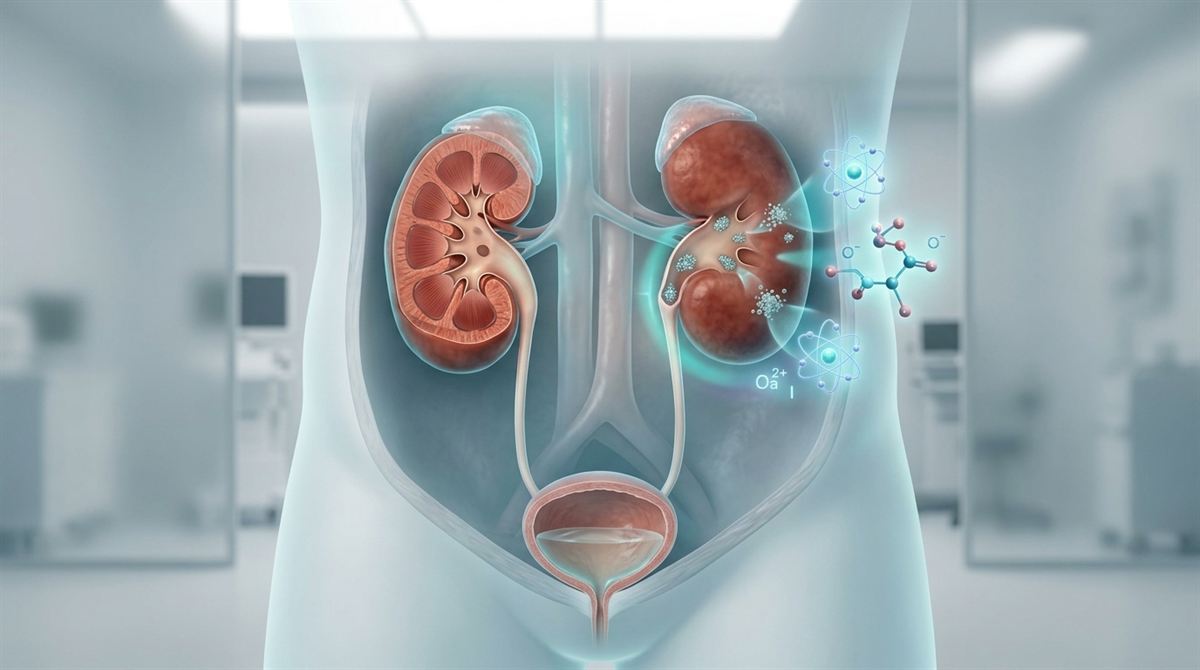
1. Beyond the Big Toe: Uric Acid and the Kidneys
Most people associate high uric acid (hyperuricemia) solely with gout—an excruciatingly painful inflammatory arthritis that typically attacks the base of the big toe (podagra) or ankles. However, as nephrologists, we view high uric acid as a serious systemic metabolic toxin that directly threatens your kidneys.
Uric acid is the final metabolic breakdown product of purines (nitrogenous compounds found naturally in bodily cells and dietary proteins). The kidneys are responsible for eliminating approximately two-thirds of all uric acid produced in the human body. When uric acid levels exceed the physiological saturation point of blood (> 6.8 mg/dL), monosodium urate crystals begin precipitating inside joint spaces and deep within renal tissues.
2. The 3 Deadly Pathways of Renal Urate Injury
High uric acid damages the renal system through three distinct clinical mechanisms:
- Uric Acid Nephrolithiasis (Kidney Stones): In persistently acidic urine (pH < 5.5), uric acid becomes insoluble and precipitates into hard, yellow-orange kidney stones. Uric acid stones are unique because they are radiolucent—they cannot be seen on standard X-rays and require ultrasound or CT scans for detection.
- Chronic Urate Nephropathy: Microscopic needle-shaped monosodium urate crystals deposit permanently inside the renal medullary interstitium, triggering chronic foreign-body granulomatous inflammation, vascular sclerosis, and progressive chronic kidney disease.
- Acute Urate Nephropathy: A sudden massive overload of uric acid crystals obstructing renal tubules, commonly seen during cancer chemotherapy (Tumor Lysis Syndrome), causing acute renal shutdown.
3. Dissolving Uric Acid Stones Without Surgery
Unlike calcium stones which usually require laser lithotripsy or surgical extraction, pure uric acid kidney stones can frequently be dissolved completely through medical therapy alone!
Uric acid solubility is exquisitely dependent on urinary pH:
- At a low urinary pH of 5.0, only 10% of uric acid is soluble.
- When urinary pH is raised to 6.5 to 7.0 through oral Potassium Citrate therapy, uric acid solubility increases by over 1,000%, causing existing stones to dissolve like sugar cubes in warm water!
4. Modern Medical Management of Hyperuricemia
Nephrologists deploy targeted pharmacological protocols to lower serum uric acid safely below 6.0 mg/dL (or below 5.0 mg/dL in severe gout with tophi):
- Xanthine Oxidase Inhibitors: Febuxostat and Allopurinol block the hepatic enzyme that produces uric acid. Febuxostat is predominantly metabolized by the liver, making it the preferred and safer agent in patients with chronic kidney disease.
- Urinary Alkalinizers: Oral Potassium Citrate or Sodium Bicarbonate, prescribed to maintain daytime urine pH consistently between 6.2 and 6.8.
- Uricosuric Agents: SGLT2 inhibitors (e.g., Dapagliflozin) have an added beneficial pleiotropic effect: they increase urinary excretion of uric acid while simultaneously protecting diabetic kidneys.
Nephrologist's Clinical Pearl — Dr. Fayaz Ahmad Wani
"Never start or rapidly increase uric acid-lowering drugs like Febuxostat in the middle of an acute painful gout flare! A sudden plunge in blood uric acid destabilizes joint crystal deposits, worsening the acute attack. First calm the acute joint inflammation with Paracetamol or short-course steroids, then initiate uric acid-lowering therapy under medical supervision alongside prophylactic cover."
5. Dietary Protocols to Lower Uric Acid Naturally
- Strictly Avoid Beer & Spirits: Beer contains high purine levels from brewer's yeast, and alcohol metabolism actively competes with uric acid excretion in renal tubules, triggering acute gout attacks.
- Eliminate High-Fructose Corn Syrup & Sodas: Fructose is the only carbohydrate known to directly stimulate uric acid synthesis in the liver.
- Moderate High-Purine Foods: Limit organ meats (liver, kidneys), red meat, shellfish, and excessive yeast extracts.
- Drink Plenty of Water: Maintain a daily urine output of at least 2.5 liters to keep urate crystals fully diluted. Fresh lemon water provides natural alkalization.
📚 Peer-Reviewed Clinical References & Guidelines
- American College of Rheumatology (ACR) Guideline for the Management of Gout ↗
- European League Against Rheumatism (EULAR) Evidence-Based Recommendations for Gout ↗
- New England Journal of Medicine (NEJM): Hyperuricemia, Gout and Kidney Disease ↗
- Fortis Escorts Hospital Amritsar - Stone Clinic & Metabolic Nephrology ↗
Frequently Asked Patient Questions
Can drinking milk help lower uric acid?
Yes! Low-fat dairy products (skimmed milk, yogurt) contain proteins (casein and lactalbumin) that promote renal excretion of uric acid, significantly reducing gout flares.
Are lentils and pulses (dal) bad for high uric acid?
Recent nutritional trials show that plant-based purines in lentils, beans, and spinach do NOT trigger gout flares or kidney damage the way animal purines (red meat, seafood) and alcohol do. Moderate consumption of cooked dal is safe for kidney patients.
Can high uric acid cause high blood pressure?
Yes. Elevated serum uric acid inhibits endothelial nitric oxide production, causing systemic vasoconstriction and stimulating the renin-angiotensin system, directly triggering hypertension.
Related Kidney Health Articles
Preventing Recurrent Kidney Stones: Hydration, Oxalates & Urine Tests
Read Full Guide → Recommended ReadingRenal Nutrition Guide: Managing Potassium, Phosphorus & Sodium
Read Full Guide → Recommended Reading10 Early Warning Signs Your Kidneys Need Immediate Attention
Read Full Guide →"Medical education empowers patients to make informed, life-saving choices. When we catch kidney decline early, modern nephrology has the tools to protect your kidneys for decades."
— Dr. Fayaz Ahmad Wani
MD (General Medicine), DM Nephrology (Osmania Medical College)
Senior Consultant Nephrologist & Kidney Transplant Specialist
Fortis Escorts Hospital ↗ & Revive Health Clinic, Amritsar