
1. The Silent Heart Threat in Renal Patients
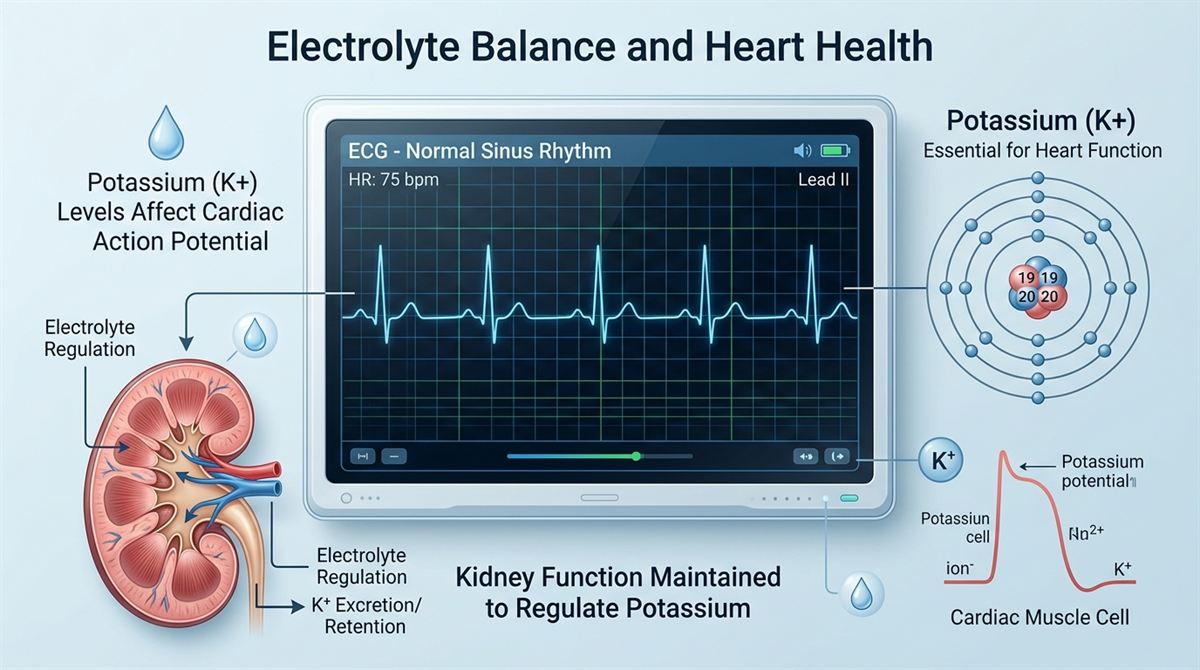
Among all electrolyte disorders encountered in nephrology, hyperkalemia (high blood potassium) is without question the most acutely dangerous. Potassium is an essential intracellular cation responsible for maintaining the resting membrane electrical potential of cardiac myocytes and skeletal nerve fibers.
While normal serum potassium levels range tightly between 3.5 and 5.0 mEq/L, a level climbing above 5.5 mEq/L poses imminent cardiovascular danger. Above 6.5 mEq/L, the electrical gradient across cardiac muscle membranes collapses, risking sudden fatal arrhythmias and cardiac arrest without any advance warning.
2. Why Kidney Patients are Prone to High Potassium
Under normal physiology, the kidneys excrete 90–95% of daily consumed potassium via aldosterone-dependent principal cells in the distal collecting duct. In kidney disease, several factors conspire to cause hyperkalemia:
- Reduced Distal Nephron Delivery: Decreased GFR means fewer nephrons are available to secrete potassium into urine.
- Hyporeninemic Hypoaldosteronism: Extremely common in diabetic kidney disease, leading to sluggish aldosterone production (Type 4 Renal Tubular Acidosis).
- Metabolic Acidosis: In kidney failure, retained hydrogen ions enter cells, forcing intracellular potassium out into the bloodstream (transcellular potassium shift).
- Nephroprotective Medications: Life-saving drugs like ACE inhibitors, ARBs, and Spironolactone reduce aldosterone, inadvertently raising serum potassium.
3. Electrocardiogram (ECG) Changes: The Diagnostic Roadmap
An ECG is the most urgent diagnostic tool in suspected hyperkalemia. It reveals how severely elevated potassium is interfering with heart rhythm:
- Potassium 5.5–6.0 mEq/L: Symmetric, narrow, tall, peaked 'tent-like' T-waves in precordial leads (V2–V4).
- Potassium 6.0–6.5 mEq/L: Prolonged PR interval, flattening and eventual disappearance of P-waves.
- Potassium 6.5–7.0 mEq/L: Widening of the QRS complex, slurred intraventricular conduction delays.
- Potassium > 7.0 mEq/L: Merging of QRS and T-waves into a deadly 'Sine Wave' pattern, immediately followed by Ventricular Tachycardia, Ventricular Fibrillation, or Asystole!
4. Emergency Medical Management Protocol
In acute severe hyperkalemia (> 6.0 mEq/L or any ECG changes), immediate hospital intervention at a tertiary center like Fortis Escorts Hospital is required:
- Membrane Stabilization: Intravenous Calcium Gluconate (10%) administered immediately. Calcium does not lower potassium, but it restores the cardiac membrane resting potential, shielding the heart from arrhythmias within 3 minutes!
- Intracellular Shifting: Intravenous regular insulin with 25% or 50% dextrose, plus inhaled Salbutamol nebulization. Insulin drives potassium back into cells, dropping serum levels within 30 minutes.
- Total Body Potassium Removal: Loop diuretics (Torsemide), novel potassium-binding resins, and emergency hemodialysis if medical therapy fails to rapidly clear the excess potassium.
Nephrologist's Clinical Pearl — Dr. Fayaz Ahmad Wani
"For years, patients with hyperkalemia were forced to stop their life-saving ACE inhibitors or ARBs. Today, modern selective potassium binders like Sodium Zirconium Cyclosilicate (Lokelma) have changed the game. These crystal binders trap potassium in the gut in exchange for sodium/hydrogen, allowing us to safely maintain patients on their kidney-protective medications without dangerous potassium spikes."
5. Practical Diet Strategies to Keep Potassium Safe
- Eliminate Coconut Water & Raw Juices: A single glass of coconut water or fresh orange juice can trigger emergency hospital admission for an advanced CKD patient.
- Double-Boil Root Vegetables: Peel and cut potatoes, sweet potatoes, and carrots. Boil them, discard the water, and cook in fresh water to leach out 40-50% of potassium.
- Choose Low-Potassium Fruits: Enjoy apples, papaya, guava, pears, and watermelon in moderate single-serving portions.
📚 Peer-Reviewed Clinical References & Guidelines
- American Heart Association (AHA) Scientific Statement on Management of Hyperkalemia in Patients with Cardiovascular and Renal Disease ↗
- KDIGO Controversies Conference on Management of Hyperkalemia in Chronic Kidney Disease ↗
- Kidney International: Novel Potassium Binders in the Modern Era of CKD Pharmacotherapy ↗
- Fortis Escorts Hospital Amritsar - Critical Care Nephrology & Emergency Electrolyte Services ↗
Frequently Asked Patient Questions
Can high potassium cause muscle cramps?
While low potassium (hypokalemia) causes severe leg cramps, high potassium (hyperkalemia) typically causes ascending flaccid muscle weakness, paresthesias (tingling/numbness in fingers and toes), and heavy limb sensations.
How quickly can potassium climb to dangerous levels?
In a patient with advanced CKD, consuming high-potassium foods (such as a banana smoothie or coconut water) can cause serum potassium to climb from safe levels into the lethal danger zone within 2 to 4 hours.
How often should CKD patients test their serum potassium?
Patients on ACE inhibitors, ARBs, or mineralocorticoid receptor antagonists should test serum potassium within 1-2 weeks of starting or changing medication doses, and every 1 to 3 months thereafter based on CKD stage.
Related Kidney Health Articles
"Medical education empowers patients to make informed, life-saving choices. When we catch kidney decline early, modern nephrology has the tools to protect your kidneys for decades."
— Dr. Fayaz Ahmad Wani
MD (General Medicine), DM Nephrology (Osmania Medical College)
Senior Consultant Nephrologist & Kidney Transplant Specialist
Fortis Escorts Hospital ↗ & Revive Health Clinic, Amritsar