
1. The Shock of Sudden Kidney Shutdown
Hearing that your kidneys have suddenly failed is a terrifying diagnosis. However, in nephrology, there is a fundamental distinction between Chronic Kidney Disease (CKD)—a gradual, permanent scarring occurring over years—and Acute Kidney Injury (AKI), a sudden, rapid impairment occurring over hours or days.
The most critical fact every patient and family must know is: Acute Kidney Injury is frequently 100% reversible! With prompt nephrological intervention, gentle supportive therapy, and removal of the offending cause, healthy nephron tubules can regenerate and return serum creatinine back to absolute baseline.
2. The KDIGO Diagnostic Definition of AKI
According to the international KDIGO criteria, AKI is formally diagnosed by any of the following:
- An absolute rise in serum creatinine of ≥ 0.3 mg/dL within 48 hours.
- An increase in serum creatinine to ≥ 1.5 times the patient's baseline value within the prior 7 days.
- A drop in urine volume to < 0.5 mL/kg/hour for 6 consecutive hours.
3. The 3 Diagnostic Categories of AKI
To reverse kidney failure, nephrologists must accurately locate the source of the injury:
- Prerenal AKI (Lack of Blood Supply): The kidney architecture itself is completely healthy, but blood flow into the kidney is severely compromised. Triggered by severe gastroenteritis (vomiting/diarrhea), blood loss, heatstroke, heart failure, or septic shock. Rapid IV fluid resuscitation typically restores function within 24–48 hours.
- Intrinsic Renal AKI (Direct Tissue Damage): Direct structural injury to glomerular filters, interstitial tissue, or tubular cells. Causes include sepsis-induced Acute Tubular Necrosis (ATN), nephrotoxic painkillers (NSAIDs), aminoglycoside antibiotics, snakebites, or glomerulonephritis. Tubular cells take 1 to 4 weeks to regenerate.
- Postrenal AKI (Urinary Obstruction): Urine is produced normally, but physical blockage prevents excretion, building destructive backpressure. Causes include bilateral kidney stones, severe prostate enlargement (BPH) in men, or pelvic malignancies. Relieving the blockage via catheterization or stenting produces immediate recovery.
4. The Role of Temporary Hemodialysis in AKI
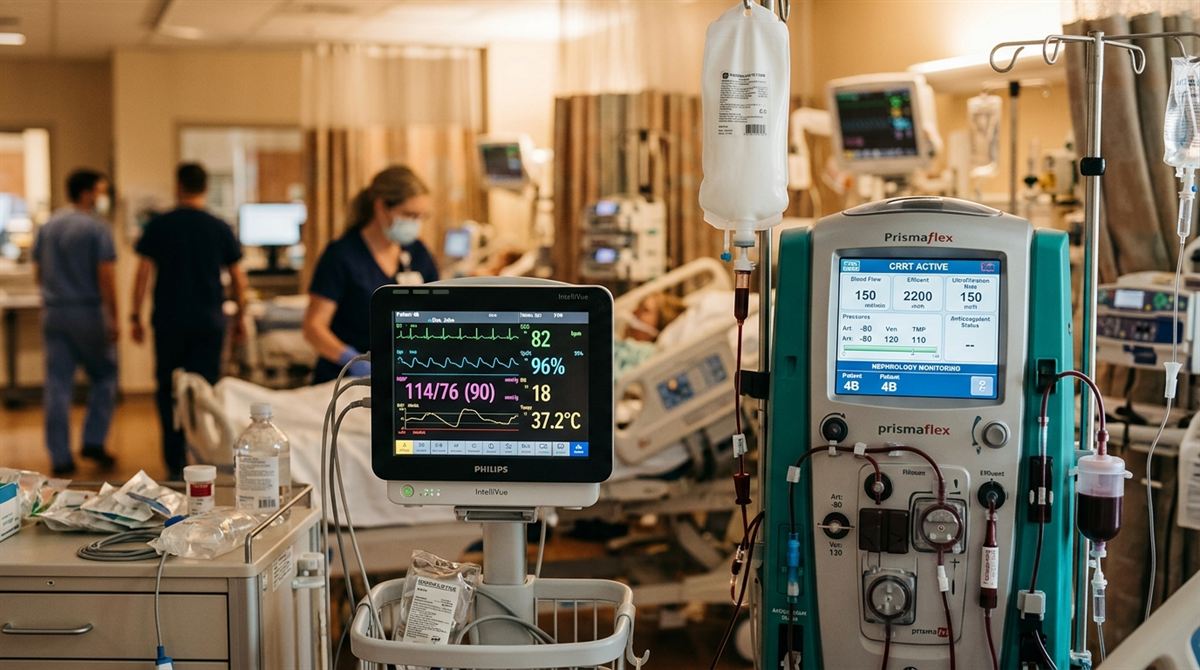
When AKI is severe, patients often worry that starting dialysis means they will be trapped on a machine for the rest of their lives. In AKI, dialysis is merely a temporary artificial life support.
By removing life-threatening potassium, clearing severe uremic toxins, and unloading pulmonary edema, temporary dialysis keeps the patient alive and allows their natural kidneys to rest, recover, and regenerate over a few weeks. Once native urine output returns and creatinine stabilizes, dialysis is safely discontinued!
Nephrologist's Clinical Pearl — Dr. Fayaz Ahmad Wani
"In our intensive care unit at Fortis Escorts Hospital Amritsar, we frequently treat critically ill patients with severe septic shock and multiorgan failure whose kidneys shut down completely. By deploying continuous renal replacement therapy (CRRT) and treating the underlying infection, we have seen patients who produced zero urine for two weeks make a complete, full renal recovery and walk out of the hospital with normal creatinine."
5. Long-Term Follow-Up: The AKI-to-CKD Transition
While clinical recovery from AKI is a tremendous milestone, research shows that an episode of AKI leaves subclinical fibrotic micro-scars. Patients who have survived AKI carry a 2- to 4-fold higher lifetime risk of developing chronic kidney disease later in life.
Every AKI survivor should undergo routine kidney function checks (Serum Creatinine and Urine Albumin) at 3 months, 6 months, and annually thereafter.
📚 Peer-Reviewed Clinical References & Guidelines
Frequently Asked Patient Questions
How long does it take for kidneys to recover from Acute Kidney Injury?
Prerenal AKI can recover within 24 to 72 hours of IV fluid rehydration. Acute Tubular Necrosis (ATN) typically requires 1 to 3 weeks for tubular epithelial cell regeneration and recovery of normal filtration.
Does needing dialysis during AKI mean I will be on dialysis permanently?
No! In true AKI, temporary dialysis is simply a supportive bridge. Once tubular cells heal and native kidney function returns, temporary catheters are removed and dialysis is permanently stopped.
Can dengue or malaria cause sudden kidney failure?
Yes. Severe dengue (dengue shock syndrome) and severe falciparum malaria frequently cause acute tubular necrosis and rhabdomyolysis-induced AKI due to capillary leaking and hemolysis.
Related Kidney Health Articles
Serum Creatinine Explained: Normal Ranges & Common Patient Myths
Read Full Guide → Recommended ReadingPainkillers & Your Kidneys: How Common NSAIDs Trigger Injury
Read Full Guide → Recommended Reading10 Early Warning Signs Your Kidneys Need Immediate Attention
Read Full Guide →"Medical education empowers patients to make informed, life-saving choices. When we catch kidney decline early, modern nephrology has the tools to protect your kidneys for decades."
— Dr. Fayaz Ahmad Wani
MD (General Medicine), DM Nephrology (Osmania Medical College)
Senior Consultant Nephrologist & Kidney Transplant Specialist
Fortis Escorts Hospital ↗ & Revive Health Clinic, Amritsar